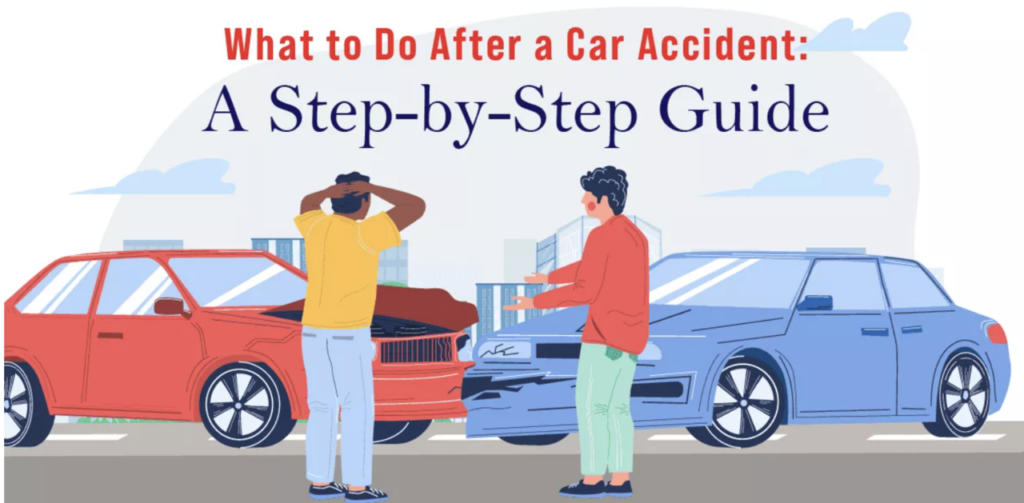
A car accident can be stressful and confusing, especially when you are not sure what you should do first.
Whether the accident is minor or more serious, knowing the basic steps can help you stay organized and make it easier to deal with the insurance process afterward.
The first priority should always be safety. Once everyone is safe, you can focus on exchanging information, documenting what happened, contacting the appropriate authorities when necessary, and notifying your insurance company.
The exact legal requirements vary from one country to another, so you should always follow the rules that apply where the accident occurred.
This guide explains the general steps to take after a car accident.
⚠️ Important: This is general information, not legal advice. Reporting requirements, insurance procedures, and obligations after an accident can differ significantly between countries and regions.
1. Stay Calm and Check for Injuries 🧘♂️
The first thing to do after an accident is to remain calm and assess the situation.
Check yourself and your passengers for injuries.
If other people are involved, check whether they appear to need emergency medical assistance, but do not put yourself in danger while doing so.
If someone is seriously injured, contact the appropriate emergency services immediately.
Your first priorities should be:
- 🩹 Check for injuries.
- 🚨 Contact emergency services when necessary.
- 🚗 Assess whether the vehicles are creating a danger.
- ⚠️ Avoid unnecessary movement of injured people.
- 👮 Follow instructions from emergency personnel.
Do not focus on insurance paperwork before dealing with an immediate safety or medical emergency.
2. Move to a Safe Location If Possible 🚧
If the vehicles can be moved safely and local rules allow it, moving them away from traffic may reduce the risk of another collision.
However, do not move a vehicle if doing so could create additional danger or interfere with emergency procedures.
Turn on hazard lights if appropriate and use warning devices where required or available.
The priority is to prevent a second accident.
3. Contact the Police or Relevant Authorities 👮
Depending on the country, the seriousness of the accident, injuries, damage, or circumstances involved, you may be required to notify the police or another authority.
It can be particularly important to contact the authorities when:
- Someone is injured.
- A person has died.
- A vehicle cannot be safely driven.
- There is a dispute about what happened.
- Another driver leaves the scene.
- There is suspected criminal behavior.
- Local law requires an official report.
Requirements vary considerably, so check the rules that apply in your location.
4. Exchange Information With the Other Driver 📋
If it is safe to do so, exchange relevant information with the other people involved.
Depending on the country and circumstances, this may include:
- Full name.
- Contact information.
- Insurance details.
- Vehicle registration information.
- Driver’s license information.
- Vehicle make and model.
- Insurance policy information.
If there are witnesses, you may also want to collect their contact details.
💡 Tip
Try to remain polite and factual.
You do not need to determine who is legally responsible at the scene. That may be decided later by insurers, authorities, or other relevant parties.
5. Take Photos and Videos 📸
If it is safe to do so, document the accident scene.
Useful photographs may include:
- 🚗 Damage to your vehicle.
- 🚙 Damage to other vehicles.
- 🛣️ Position of the vehicles.
- 🚦 Traffic signs and signals.
- 🛞 Road conditions.
- 🧱 Nearby structures or objects involved.
- 📍 The wider accident scene.
Take several photographs from different angles.
If possible, also document details that may help explain how the accident occurred.
However, never put yourself in danger simply to take a photograph.
6. Write Down What Happened 📝
Your memory of an accident can change quickly after a stressful event.
As soon as you can, write down the basic facts.
For example:
- Date and time.
- Location.
- Direction of travel.
- Weather conditions.
- Road conditions.
- What happened immediately before the collision.
- Damage observed.
- Names of witnesses.
Try to separate facts you observed from assumptions about what another person was doing.
This information can be useful when reporting the accident to your insurer.
7. Do Not Admit Fault at the Scene ⚠️
After an accident, emotions can be high.
Avoid making statements such as:
«It was completely my fault.»
or:
«I wasn’t paying attention.»
Even if you believe you caused the accident, determining legal or insurance responsibility can involve factors that are not immediately obvious.
Instead, provide factual information and cooperate with the appropriate authorities and insurance companies.
This does not mean you should hide information. It simply means you should avoid making conclusions about liability before all the facts are reviewed.
8. Contact Your Insurance Company 📞
Once the immediate situation is under control, contact your insurance company according to the requirements of your policy.
Your insurer may ask for:
- Accident date and location.
- Information about the other driver.
- Vehicle details.
- Police report information.
- Photographs.
- Witness information.
- Description of what happened.
Some policies require accidents to be reported within a specific period.
📌 Check your policy
Look for sections explaining:
- How to report a claim.
- Reporting deadlines.
- Required documentation.
- Approved repair facilities.
- Emergency assistance.
- Claims contact information.
9. Keep All Relevant Documents 📂
Create a folder containing everything related to the accident.
This can include:
- 📸 Photos.
- 📋 Accident reports.
- 📄 Insurance documents.
- 💬 Relevant messages.
- 🧾 Repair estimates.
- 🏥 Medical documentation, where applicable.
- 👥 Witness information.
Keeping everything organized can make the claims process easier.
10. Don’t Repair the Vehicle Before Speaking to Your Insurer 🔧
Depending on the policy and the circumstances, your insurance company may want to inspect the vehicle or authorize repairs before work begins.
For this reason, avoid making major repairs immediately unless necessary for safety.
Ask your insurer:
«What should I do before repairing the vehicle?»
They may provide instructions regarding inspections, repair shops, estimates, or documentation.
What Information Should You Collect After an Accident? 📊
| Information | Why it may be useful |
|---|---|
| 👤 Driver details | Identify the people involved |
| 🚗 Vehicle details | Identify the vehicles |
| 🛡️ Insurance information | Start the claims process |
| 📸 Photos | Document the scene |
| 👥 Witness contacts | Provide additional information |
| 👮 Police report | Official documentation where applicable |
| 🧾 Repair estimates | Document vehicle damage |
| 📍 Accident location | Establish where it occurred |
What Should You Avoid After a Car Accident? ❌
There are several mistakes that can complicate the situation.
❌ Leaving the scene when you are required to remain
Leaving may have serious legal consequences depending on local law.
❌ Ignoring injuries
Some injuries may not be immediately obvious. Seek appropriate medical attention when necessary.
❌ Arguing with the other driver
Keep communication calm and factual.
❌ Posting details of the accident on social media
Public posts can create unnecessary complications, particularly while an insurance or legal matter is being investigated.
❌ Destroying or losing documentation
Keep photographs, reports, receipts, and communications organized.
❌ Delaying notification to your insurer
Follow the reporting requirements in your policy.
What Happens After You Report the Accident? 🔎
Once you notify your insurance company, the claims process may involve several steps.
Depending on the situation, the insurer may:
- 📋 Register the claim.
- 🔎 Review the circumstances.
- 📸 Examine photographs or other evidence.
- 🚗 Inspect the vehicle.
- 🧑🔧 Request a repair estimate.
- ⚖️ Determine responsibility according to the applicable process.
- 💰 Calculate the covered amount.
- 🔧 Authorize repairs or process an eligible payment.
The exact process varies between insurers and countries.
What If the Other Driver Does Not Have Insurance? 🚨
This situation can be complicated and the available protection varies by country.
Some insurance systems offer specific coverage for accidents involving uninsured or unidentified drivers.
In other situations, compensation may involve a government-backed compensation mechanism or another legal process.
If you are involved in an accident with an uninsured driver, contact your insurer and the relevant authorities as soon as possible.
Do not assume that you will automatically have to pay all costs yourself.
Car Accident Checklist ✅
Save this checklist in case you ever need it:
- 🩹 Check for injuries.
- 🚨 Contact emergency services if necessary.
- 🚧 Move to a safe location if possible and permitted.
- 👮 Contact authorities when required.
- 👤 Exchange information.
- 📸 Photograph the scene.
- 👥 Collect witness information.
- 📝 Write down what happened.
- 📞 Notify your insurer.
- 📂 Keep all documents.
- 🔧 Follow your insurer’s instructions before repairs.
Frequently Asked Questions ❓
Should I call the police after a car accident?
It depends on the circumstances and local laws. Injuries, serious damage, disputes, or other specific situations may require contacting the authorities.
Should I admit fault after an accident?
Avoid making conclusions about legal responsibility at the scene. Provide factual information and allow the relevant authorities and insurers to assess the circumstances.
How soon should I contact my insurance company?
Check your policy because some insurers establish specific reporting periods.
Should I take photos after a car accident?
If it is safe, photographs can help document vehicle damage, road conditions, vehicle positions, and other relevant details.
What if I feel fine immediately after the accident?
Some injuries may not be obvious immediately. If you develop symptoms or have concerns, seek appropriate medical attention.
Can I repair my car immediately?
Check with your insurer first. The company may need to inspect the vehicle or approve the repair process.
Conclusion: Stay Safe and Document Everything 🛡️
Knowing what to do after a car accident can make an extremely stressful situation easier to manage.
Your first priority should always be safety and medical assistance when necessary. Once the immediate danger has passed, focus on documenting the accident, exchanging information, contacting the appropriate authorities, and notifying your insurance company.
Remember the basic sequence:
🩹 Safety → 👮 Authorities → 📋 Information → 📸 Evidence → 📞 Insurance
The exact legal requirements and insurance procedures vary from one country to another, so always follow the rules applicable where the accident occurred and check the conditions of your own policy.
🚨 The most important thing after an accident is not proving who was right or wrong at the scene. It is keeping people safe, preserving useful information, and following the correct reporting process.